Category: Uncategorized
304 vs. 316 Stainless Steel
November 25, 2026Choose 316 stainless steel for salt, chlorine or harsh chemicals. Choose 304 for indoor, dry work where looks and cleanability matter most.
Every week someone calls us and says, “I need stainless. Just give me whatever’s standard.” Standard usually means 304, and about one time in ten, 304 is the wrong answer. You don’t find out on day one. You find out eight months later, when brown streaks start bleeding out of a weld and somebody has to explain why a stainless part is rusting.
What is the difference between 304 and 316 stainless steel?
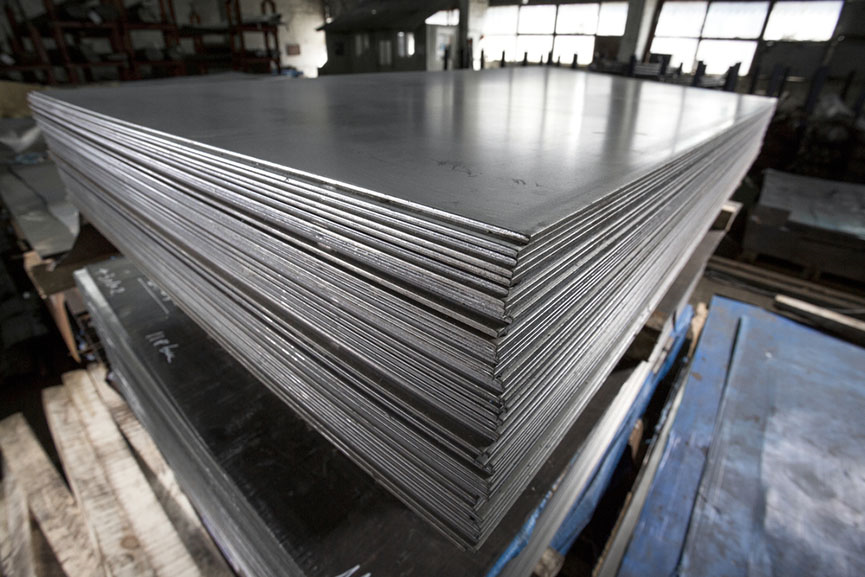
Put a 304 sheet next to a 316 sheet and you won’t be able to tell them apart. Both are austenitic stainless steels: tough, easy to form and weld, and not magnetic when annealed.
The difference is in the recipe. 304 is the familiar 18% chromium, 8% nickel mix. 316 has a little less chromium, more nickel, and 2 to 3% molybdenum.
| Element | 304 | 316 |
|---|---|---|
| Chromium | 18–20% | 16–18% |
| Nickel | 8–10.5% | 10–14% |
| Molybdenum | None specified | 2–3% |
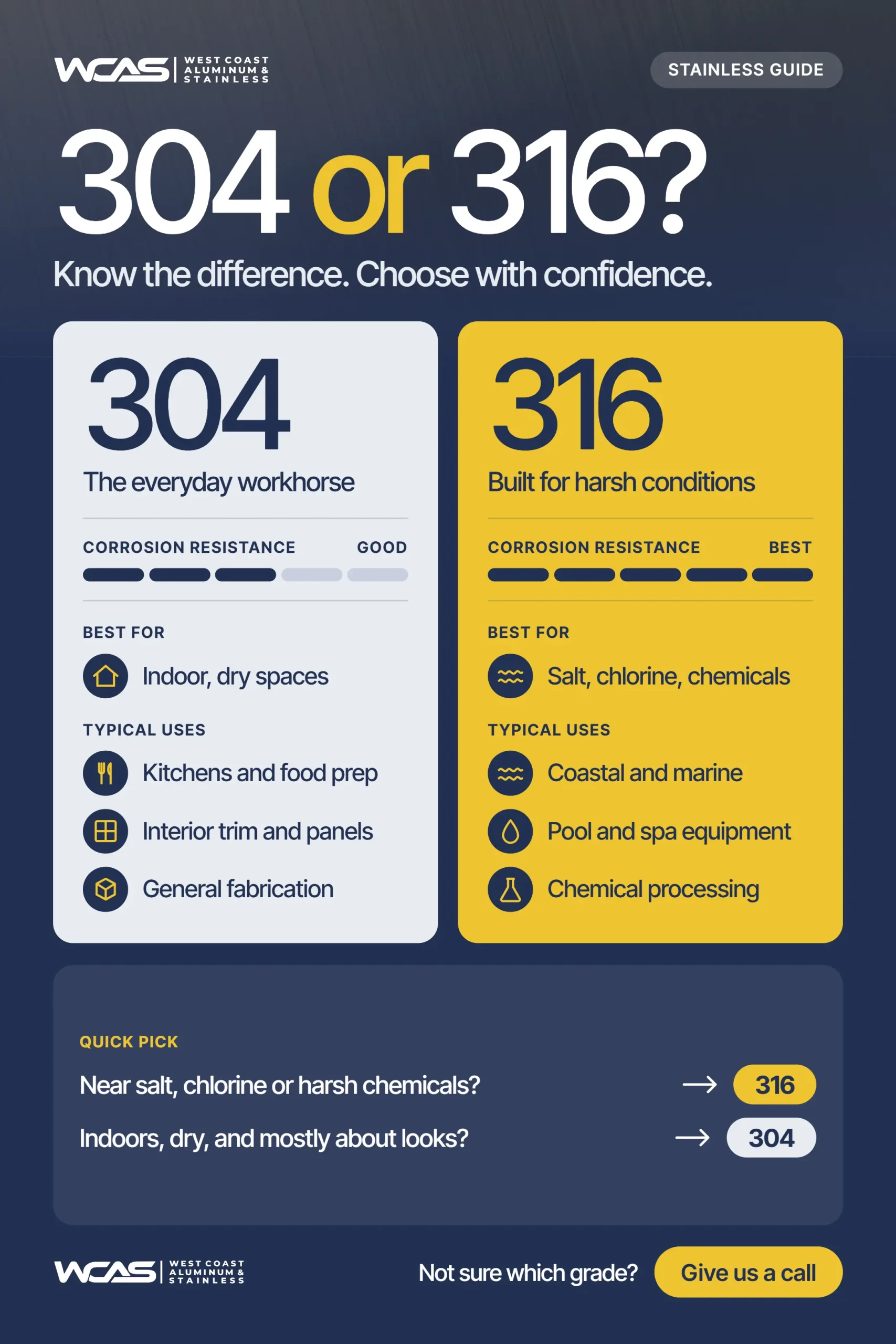
That molybdenum is the whole story. It helps 316 resist chlorides, found in salt, bleach, de-icing chemicals and many everyday cleaning products.
When to use 304 stainless steel
304 is the workhorse for a reason. If your part lives indoors, stays reasonably dry, or only meets mild chemicals, it does the job for less money. Common uses include:
- Food prep tables, sinks and kitchen equipment
- Indoor architectural trim, handrails and panels
- Appliance housings and enclosures
- General fabrication where looks and cleanability matter more than chemical exposure
If your part will never see salt air, pool chemicals or harsh washdowns, paying extra for 316 is mostly buying peace of mind you don’t need.
When 316 stainless steel pays for itself
Chlorides attack the thin, invisible chromium oxide layer that protects stainless steel. Once that layer fails in one tiny spot, you get pitting. The surface can look fine while a pinhole quietly works its way inward.
Molybdenum makes that layer far tougher. Reach for 316 in rough environments such as:
- Coastal installations, marine hardware, docks and boat fittings
- Pool and spa equipment, and anything near a chlorinated pool
- Chemical, pharmaceutical and lab equipment
- Outdoor architectural work close to the ocean
- Food processing lines that get aggressive sanitizers every day
On the West Coast, this matters more than people expect. You don’t have to be on the sand. A railing a few miles inland can still get a steady dose of marine air, and we’ve heard plenty of stories about 304 that looked tired long before it should have.
Is 316 stainless steel worth the extra cost?
316 costs more. The gap moves with nickel and molybdenum prices, so we won’t quote a number that will be stale next month. It is reliably a noticeable step up.
Don’t compare the price per pound. Compare the cost of the material to the cost of replacing it. A 316 handrail that lasts decades is cheaper than a 304 one you tear out in year six, especially once you count labor and downtime. On the flip side, spec 316 for a dry indoor shelf and you’ve spent money for nothing.
The right grade is the cheapest one that survives its environment.
What about 304L and 316L?
The L means low carbon. When you weld thicker material, lower carbon reduces the chance of carbide precipitation in the heat-affected zone, which can leave a weld prone to corrosion later. Many fabrication shops use L grades by default. If a job involves heavy welding and you’re not sure, ask us.
How to choose between 304 and 316
Ask yourself three questions:
- Will it touch salt, chlorine or harsh chemicals? If yes, go with 316.
- Is it outdoors near the coast? Lean toward 316.
- Is it indoors, dry, and mostly about looks and cleanability? 304 is fine.
If you land in the middle, which happens a lot, talk to us before you order. A five-minute conversation about where the part will live is worth more than any spec sheet.
Get 304 and 316 stainless steel from WCAS
We won’t push you toward the pricier option to bump a ticket. If 304 does the job, we’ll say so. If your application is going to punish it, we’ll say that too.
We stock both grades in a range of sheet, plate, bar and tube, with no minimums. Stock items are available for next-day delivery, though they can move quickly. Cut-to-size orders run on their own timeline, so ask us for the lead time.
Stuck between 304 and 316? Call us at (626) 582-8968, Monday to Friday, 8 AM to 5 PM.
This article is adapted from our LinkedIn article on 304 vs. 316 stainless steel.
- 1
- 1-1 of 1 results